
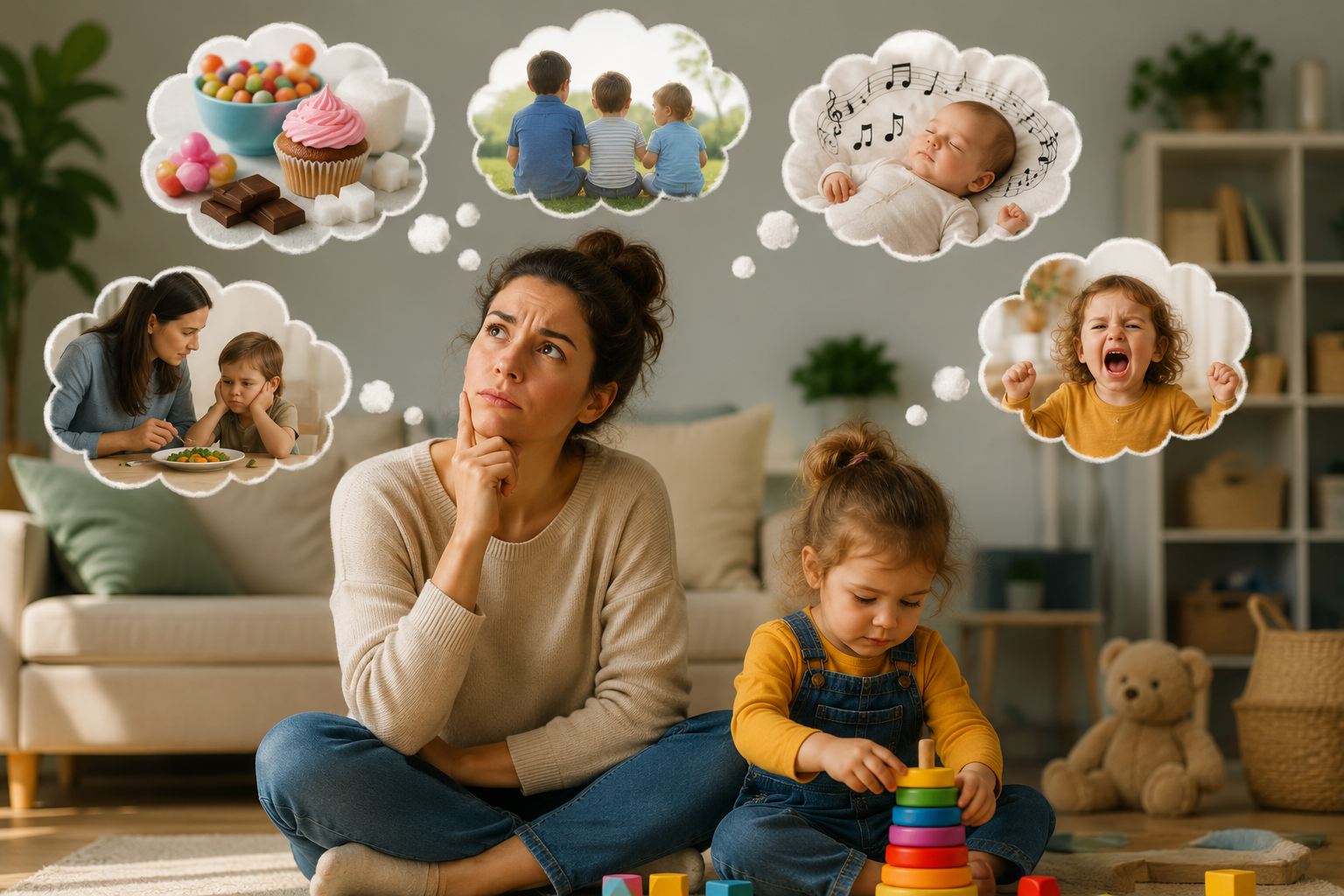
Almost immediately after my wife and I found out we were having our first child, the misinformation came pouring in. Old Wives Tales’, social media influencers, and toxic Facebook groups were everywhere. There is so much unnecessary noise when becoming a parent that learning how to block it out is pertinent. We now know so much about child development, and as you start to understand it, you will quickly realize that many people do not actually know what they are talking about. The data I frequently cite comes from Dr. Judith Rich Harris, whose extensive research found that parents do not shape their children’s personalities. This research was published more than 30 years ago and has been reinforced by experts ever since. If you don’t want to believe this, I have a little experiment: For those with multiple children, try interchanging their personalities. You won’t be able to do it. Our children’s personalities are mainly shaped by their genetics and the neighborhood in which they were raised.
Below are 5 myths that are constantly pushed on parents:
Sugar:
Sugar is not a stimulant and it will not make your child more hyper on its own. In fact, extensive studies have been done to prove this. The more likely immediate effect from your child consuming sugar is a tummy ache. That’s not to say it is good for you; it only means it will not give them a rampaging burst of energy.
But my child gets hyper when he eats sugar. This often stems from the environment in which sugar is given (birthday parties, vacations, holidays, etc.), which increases energy in little ones. In other words, your kids will be more energetic because they’re excited about going to Salt & Straw, not from eating the ice cream cone.
Children also constantly hear that sugar will give them energy, but it then acts as a placebo. But sugar alone will not make your child hyper.
Birth Order:
Parents typically do not like hearing this one, but there is no credible research suggesting that children’s birth order affects their personality. Parents are sensitive to hearing this largely because it is a myth perpetuated for generations. It feels true, especially when we can sometimes point to examples. But the problem here is that many counterexamples contradict this.
To be clear, different things can certainly happen to kids based on birth order (more responsibilities can land on the oldest, the youngest has access to more resources, etc.). So, when you are taking a family hike through Forest Park, the oldest might be asked to lead the way, but this is because they are older and usually more capable, not because they are inherently more responsible.
Playing Classical Music:
I really enjoy classical music and have played it for my kids ever since they were born. It is a wonderful way to expose them to the arts and different types of sounds, and hopefully, they gain an interest in the art. Going as a family to watch a performance by the Oregon Symphony is a whole lot of fun and builds great memories.
However, something I still hear today is that playing classical music for babies and young children will make them smarter than they would have been, or even make them geniuses. This is not true. This myth has been perpetuated for quite a while, but there is no credible data to prove it. So yes, please play classical music for your children. It’s good to expose them to the arts. Just know that it is not a magic pill guaranteed to send them to an Ivy League university.
Finish Your Plate
Many millennials and older generations grew up with the parental demand to finish our plates before leaving the table. The thought behind this is sincere. Parents want to make sure their child’s tummy is full and that they don’t get hungry later on. However, this pure intention can actually cause quite a bit of damage. Young children know when they are hungry, and they usually stop eating when they are full.
Now, I have children myself, so I completely understand that sometimes they are distracted, don’t like the meal, etc. But what we now know about child development is that they are usually distracted by other things because they are not hungry. A friendly suggestion is to ask them, “Can you try to take one more bite?” Can help encourage them to see whether they are actually full. So, the next time you are all out at Por Que No? Don’t stress about them eating every last bite. Maybe encourage them to have one more bite and enjoy the sunshine.
Terrible Two’s
It’s not terrible. It’s beautiful. These are the teachable twos in which your little one is gaining more ability and independence. We should foster this, not dread it. Perpetuating the myth of the terrible twos will only cloud your experience as a parent and, quite frankly, scare others from wanting to start a family of their own. Being two years old is actually a super fun stage where their imagination and personalities begin to soar. Embrace it.

Alex is a devoted husband and father born and raised in Portland, Oregon. He is a professional artist, author, and advisor for both Yale and Harvard University’s arts departments. His books, ‘Selling Leonardo: The Art World’s Greatest Scandal’ and ‘Holy Ghost: Decoding Leonardo da Vinci’s Final Painting’ are available wherever books are sold.