
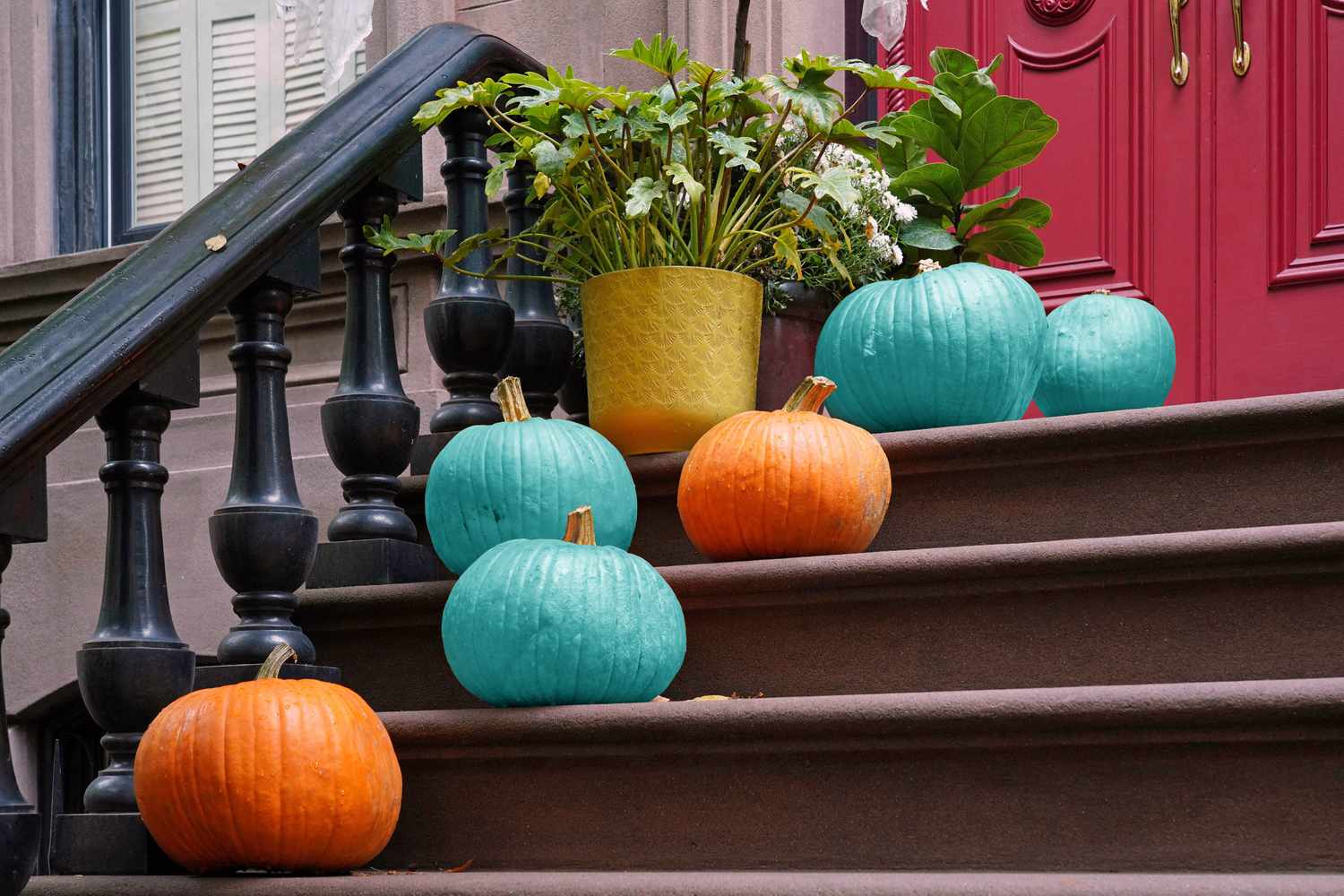
Around this time every year, neighborhoods fill up with glowing jack-o’-lanterns, rainy-night trick-or-treat routes, and kids who have been planning their costumes for weeks. So if you’ve noticed a teal pumpkin on a neighbor’s porch, you may have wondered what it means.
What is a teal pumpkin?
The Teal Pumpkin Project is a Halloween campaign from Food Allergy Research & Education (FARE). A teal pumpkin at a home or event lets families managing food allergies know that a non-food option is available for trick-or-treaters. That might be a sticker, a glow stick, or a tiny toy, offered alongside (or instead of) candy. Teal is also the official color of food allergy awareness.
The campaign has grown into a national movement. Families in all 50 states took part in the first year, 2014, and the number of participating homes has kept growing.
Why does it matter?
Halloween is built around candy, and that can be tough for kids with food allergies. According to FARE, 1 in 13 children has a food allergy, and an informal FARE poll found that more than 65% of kids with food allergies have had a negative Halloween experience. Picture a child collecting treats all night that they can’t eat, or a parent checking every wrapper under a porch light while the other kids race ahead.
A teal pumpkin tells that family: you’re welcome here, and we thought of you.
It helps other kids too. Some families simply prefer non-consumable treats, and many kids are just as excited about a glow bracelet or a bouncy ball as another fun-size candy bar.
How Oregon families can help
You don’t need a perfect porch to take part. Here are a few ways you can help join in and raise food allergy awareness in your neighborhood.
- Put out a teal pumpkin. Paint a real or craft pumpkin teal and set it near your door. It’s a great afternoon project for kids, especially on a rainy October day. If painting isn’t your thing, FARE offers free printable signs you can display instead.
- Offer non-consumable trinkets in a separate bowl. This part matters. Keep the allergy-friendly items in their own bowl to avoid cross-contamination, and don’t toss stickers in with the candy.
- Add yourself to the map. FARE’s Teal Pumpkin Project map lets families plan their routes ahead of time, so adding your address can make a real difference to someone on your street.
- Bring it to your community. Teal pumpkins work at trunk-or-treats and other community events, too. If you’re involved in a school carnival, church trunk-or-treat, or neighborhood gathering, suggest a teal pumpkin table or a non-food treat station.
Tips for making it easy
- Keep it simple and affordable. Stickers, temporary tattoos, pencils, bouncy balls, glow sticks, mini notepads, and spooky erasers all work well. A bulk pack goes a long way.
- Choose fun over fancy. Anything that lights up is usually a hit.
- Shop early. Retailers like CVS, FARE’s retail partner, carry a Teal Pumpkin Project line, and dollar and craft stores have plenty too. Stock thins out as Halloween gets closer.
- Remember that not all candy is safe for everyone. Even if you hand out candy, the separate non-food bowl is what makes the difference.
- Talk with your kids. If your child doesn’t have allergies, explain that some friends can’t eat certain foods, and that a teal pumpkin means a house has treats that work for everyone.
- If your child has allergies, plan ahead. Check the map for nearby participants and let your child know which houses to visit. Keep reading labels on any food treats, and bring your usual safety plan, including any emergency medication.
A small thing that goes a long way
Halloween is about community: kids in costume, neighbors out on porches, rain jackets over capes. A teal pumpkin is one of the simplest ways to make sure every child gets to be part of it. With Halloween just around the corner, there’s still time to grab some paint and a pumpkin to send a positive, inclusive message out to your neighborhood.
For printables, treat ideas, and the map, visit FARE’s Teal Pumpkin Project page.
Emily currently lives in Orange County, California after spending four years in Illinois and half a year teaching in Florence, Italy. She holds a B.A. in English Literature from Knox College and an M.A. in Counseling from the University of San Diego and has taught English to native speakers and ESL students for over three years. When she’s not working as a School Counselor or writing, she enjoys traveling the world, playing instruments, and blogging about Millennial experiences at Long Live the Twenties.