
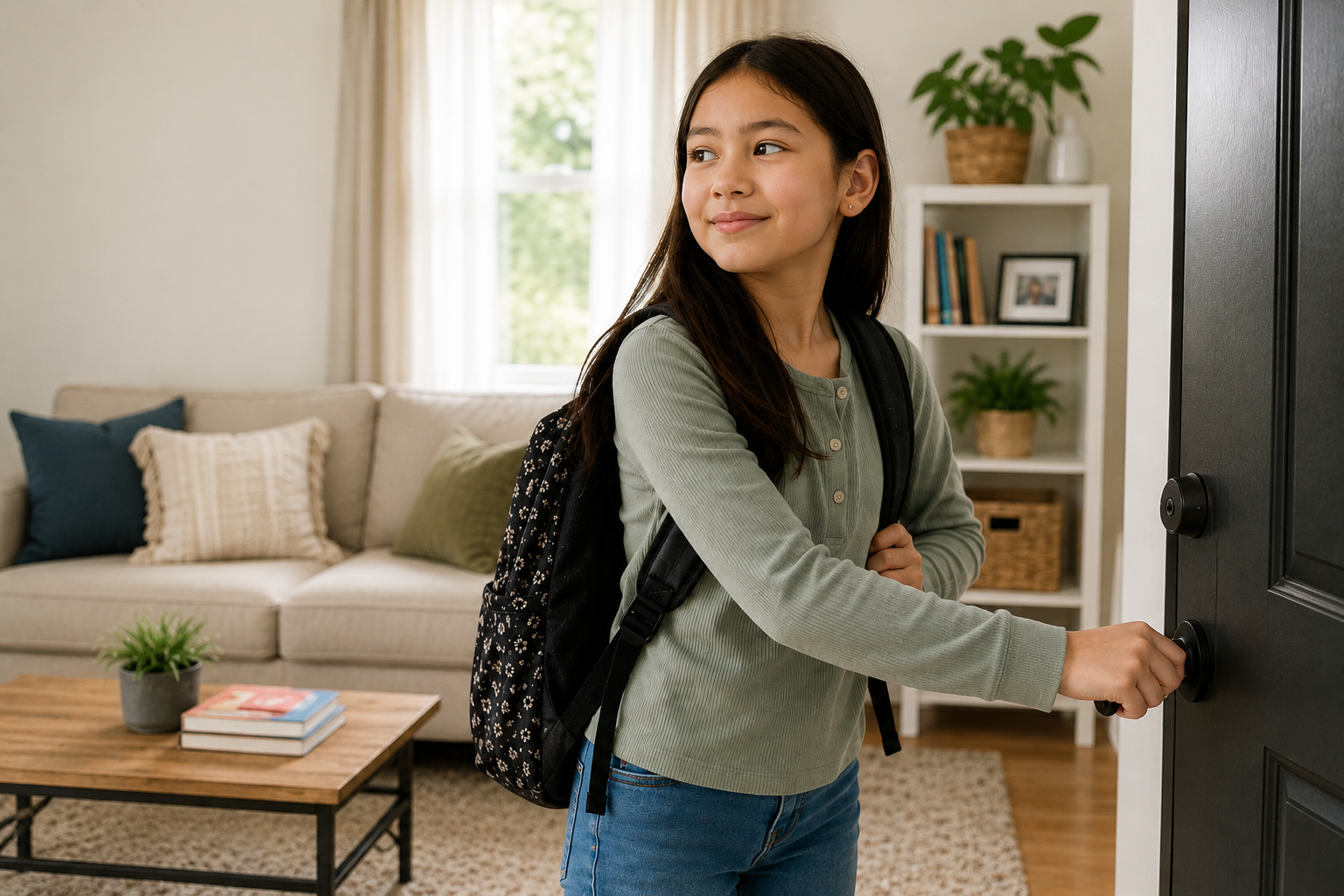
Back-to-school season brings a new round of scheduling puzzles for parents. School might end at 2:30 or 3:00, but the workday certainly doesn’t. For some families, that raises a big question: Is my child old enough to stay home alone for a little while after school?
In Oregon, the answer isn’t as simple as reaching a certain birthday. State law doesn’t establish one universal age when every child can safely stay home alone. However, Oregon law does specifically address children under age 10. Under ORS 163.545, a caregiver can commit second-degree child neglect if they leave a child under 10 unattended with criminal negligence for a period of time or in circumstances likely to endanger the child’s health or welfare.
In other words, turning 10 isn’t an automatic green light. It simply means parents need to look beyond the number on the birthday cake and decide whether their particular child is actually ready.
Age matters, but maturity matters more
Some 11-year-olds might feel perfectly comfortable spending an hour alone after school. Others may panic the second they hear a strange noise upstairs.
The American Academy of Pediatrics notes that many experts consider 11 or 12 an appropriate age for staying home alone for a few hours, but it also stresses that readiness varies from child to child and family to family.
Before deciding, think about how your child handles responsibility when you’re around. Do they follow household rules without constant reminders? Can they make reasonable decisions when something unexpected happens? Do they know when a situation is serious enough to call an adult?
Most importantly, ask your child how they feel about it. A child who is nervous or strongly opposed to being alone probably isn’t ready, even if you think they “should” be by their age.
Ask a few “what if?” questions
One of the easiest ways to gauge readiness is to give your child a few realistic situations.
What would you do if someone knocked on the door? What if the power went out? What if you smelled smoke? What if you got hurt? What if your phone stopped working? What if your younger sibling wouldn’t listen to you?
You aren’t looking for perfect answers. You’re looking to see whether your child can stay calm, recognize a problem and know when to get help.
Children who stay home alone should know how to call 911, contact their parents or caregivers, and reach another trusted adult nearby. The American Red Cross also recommends posting emergency numbers somewhere easy to find and practicing what children should do during emergencies before they are left alone.
For Oregon families, it also makes sense to talk about situations we regularly encounter here. What should your child do during a power outage? What if wildfire smoke suddenly gets bad? What if there’s severe weather? Your emergency plan doesn’t need to resemble a disaster movie, but your child should know the basics.
Start small
The first test probably shouldn’t be leaving your child alone for three hours while you’re across town.
Instead, try a short practice run. Leave for 10 or 15 minutes while staying nearby. Maybe take a walk around the neighborhood or run a quick errand. When you return, talk about how things went.
The American Academy of Pediatrics similarly recommends practice runs before children spend longer periods by themselves.
If that goes well, slowly increase the amount of time. A child who handles 20 minutes comfortably may eventually be ready for an hour after school. Building up gradually also gives parents a chance to spot problems before the arrangement becomes part of the regular schedule.
Set very clear house rules
Being home alone comes with a little freedom, but it shouldn’t suddenly become a miniature version of “Home Alone.”
Decide ahead of time what your child can and can’t do. Can friends come over? Can they use the stove or oven? Can they go outside? Can they walk to a friend’s house? Are there rooms or items that are off-limits?
Food is another easy place to plan ahead. Have snacks available that don’t require complicated cooking. Make sure medications, firearms, alcohol, cannabis products and anything else potentially dangerous are secured and inaccessible.
You may also want a simple after-school routine. For example, your child comes inside, locks the door, texts you to say they’re home, gets a snack and starts homework. A predictable routine can make the transition much easier for everyone.
Be careful when siblings are involved
A child being ready to stay home alone doesn’t automatically mean they’re ready to take care of a younger sibling.
Watching another child adds responsibility quickly. Your older child now has to manage not only their own decisions, but someone else’s behavior, needs and possible emergencies.
If you’re considering having siblings stay home together, think about their relationship, maturity levels and how well the older child handles responsibility. A child who is completely comfortable alone may feel overwhelmed when they’re suddenly responsible for a younger brother or sister.
Make sure there’s backup nearby
Even a responsible child shouldn’t feel completely on their own.
Ideally, identify a trusted neighbor, relative or family friend nearby who your child can contact if something happens and you’re unable to get home quickly. Make sure that adult knows about the arrangement, too.
Your child should also know your address, your phone number and exactly how to explain where they are if they need emergency help.
There’s no prize for doing it early
Staying home alone can be a great step toward independence. Kids get to prove they can handle responsibility, while parents gain a little more flexibility during the often-chaotic after-school hours.
But there’s no reason to rush it.
Oregon law provides an important boundary for younger children, but parents still have to decide when their own child is ready. Look at maturity, confidence, safety skills, the length of time they’ll be alone and the environment around them.
And if your child isn’t quite ready this school year, that’s fine. The goal isn’t to reach the “home alone” milestone as quickly as possible. It’s to reach it when both you and your child feel confident they can handle it safely.
Oregon resources parents should know about
If you’re deciding whether your child is ready to stay home alone, there are several Oregon resources worth bookmarking.
- Oregon’s child neglect law, ORS 163.545: Parents who want to read the actual state law can find it through the Oregon Legislature. ORS 163.545 covers leaving a child under age 10 unattended in circumstances that may endanger the child’s health or welfare.
- Find Child Care Oregon: If your child isn’t ready to stay alone after school, this statewide resource can help families search for child-care providers. Parents can also call 211, text “children” or “niños” to 898211, or contact 211info for personalized child-care referrals.
- Oregon Child Care Safety Portal: Before choosing an after-school or child-care provider, parents can use the Oregon Department of Early Learning and Care’s portal to review licensing status, inspection history and other safety information.
- OR-Alert: Oregon families can use OR-Alert to find their local emergency notification system. This can be especially useful if an older child will be home alone during wildfire season, severe weather or another emergency.
- Be 2 Weeks Ready: The Oregon Department of Emergency Management offers free tools for creating a family emergency plan. Even if you’re nowhere near having two weeks of emergency supplies sitting neatly in the garage, the planning resources can help families talk through what children should do during an outage, wildfire, earthquake or other emergency.
- Oregon Poison Center: Save 1-800-222-1222 in your phone and make sure older children know where to find it. Oregon Poison Center specialists are available 24/7 if someone may have swallowed, inhaled or otherwise been exposed to something dangerous.

Tiffany Wilson is a 42-year-old stay-at-home mom from Tigard, Oregon, raising three kids—Sophie, Noah, and Riley. She’s a warm, hands-on parent who mixes daily routines with creative fun, whether it’s a backyard scavenger hunt or building a blanket fort in the living room.