
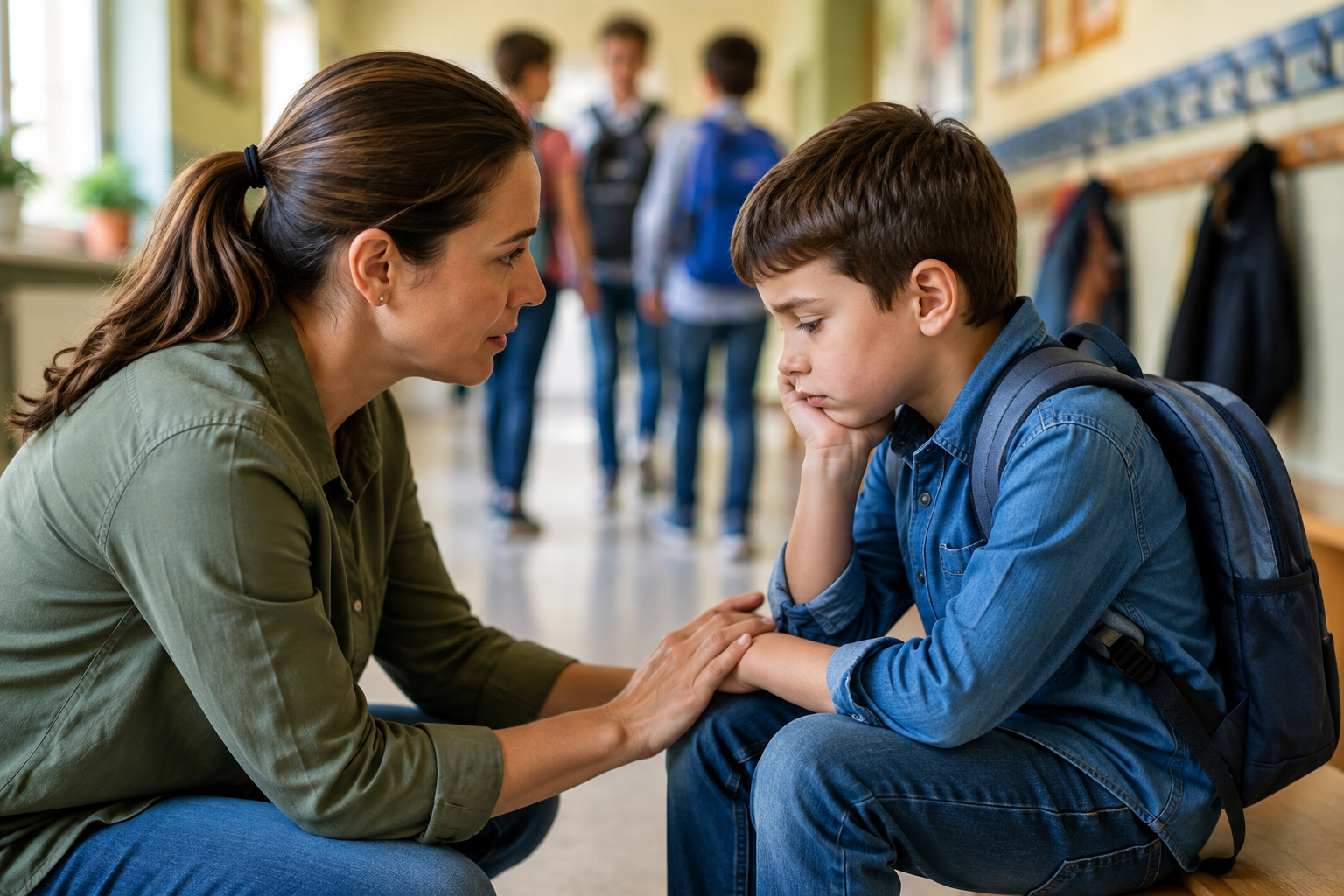
It’s that time of year again. Kids are excited for school, and parents worry about how to help them handle issues with other children. Bullying has become a big problem in schools, and parents need resources to help them support their children when they are at school. Finding effective ways to talk with your child about handling conflict is an important conversation to have before school starts this year.
1. Teach your child the difference between conflict and bullying
Conflict:
“Two kids disagree, both have some power in the situation, and they can often work it out with help.”
Bullying:
“Someone is repeatedly hurting, intimidating, humiliating, excluding, or threatening another child, often with a power imbalance.”
Also explain to your child that physical bullying isn’t the only kind. It can include:
- Name-calling
- Rumors
- Social exclusion
- Threats
- Taking or destroying belongings
- Online harassment
- Embarrassing pictures or messages
- Intimidation
- Repeated teasing
- Sexual comments or harassment
- Targeting a child because of a disability or another protected characteristic
StopBullying.gov specifically advises parents to understand what happened rather than automatically labeling every unpleasant interaction as bullying, while still taking harmful behavior seriously.
2. Give your child a simple “BULLYING PLAN”
I would teach children five steps:
STEP 1: Be calm and confident.
Teach them to stand up straight, look toward the other child if it is safe, and say:
“Stop. I don’t like that.” or “Please don’t talk to me that way.” They don’t need a long argument.
STEP 2: Don’t fight back
Teach them: “My job is to get safe, not to win a fight.”
If confronting the other child isn’t safe, they should walk away and find an adult. StopBullying.gov specifically advises children not to fight back physically.
STEP 3: Get near safe people
Teach your child to move toward:
- Their teacher
- Counselor
- Principal/assistant principal
- Playground supervisor
- Bus driver
- School office
- Trusted friend
- Another trusted adult
Bullies often choose situations where adults aren’t nearby, so identifying safe places and adults ahead of time can be very helpful.
STEP 4: Tell an adult
Make this rule very clear: “If someone hurts you, threatens you, repeatedly targets you, or makes you afraid to go to school, you need to tell an adult.” And tell them: “You will never get in trouble with me for telling me something that happened.”
3. As a parent, become your child’s advocate, not their adversary
This is one of the most important pieces. When something happens, it starts with collaboration rather than confrontation. Instead of: “Your school isn’t doing anything about this!” Try:
“I’m concerned about something affecting my child’s safety and ability to learn. I want to work with you to understand what is happening and develop a plan.” That approach doesn’t mean being passive. It means being calm, persistent, and documented. The Oregon Department of Education specifically recommends approaching bullying concerns through partnership and shared goals while making sure important next steps, such as a safety plan, are documented in writing.
4. Document everything
If the problem continues, create a simple parent incident log.
Save emails from teachers and other staff at your child’s school, including screenshots, dates and times, names of the adults notified, description of what your child said happened, changes in your child’s behavior, missed school, doctor appointments because of the issue, counseling appointments as well as any changes in academics.
- School communications
- Screenshots
- Dates and times
- Names of adults notified
- Your child’s description of what happened
- Changes in behavior
- Missed school
- Doctor visits
- Counseling appointments because of the conflict
- Academic changes
When writing to teachers or administrators, stick to the facts and ask them to support your child and stop the other student’s behavior. You can request that your child have a teacher or staff member with them between classes and at lunch so the child feels safe. This documentation becomes extremely valuable if the situation escalates. If you have a teen, high schools will create specific safety plans based on the situation to keep your child safe.
5. Ask the school for a specific plan
Ask for a specific safety plan for your child. Make sure it is in writing and that the school is doing what they can to resolve the situation between the students. Ask them to report any other incidents to you and to contact you by phone and by email. Keep this documentation for your records.
It’s important to teach your child how to deal with other children and how to solve problems. Teaching them to advocate at an early age will help them deal with children they may not have a good relationship with, or children who bully others. Kindness and respect go a long way no matter how old your child is. As a parent, it is always good to communicate with your child’s teacher and administrator to build strong relationships with them. Having the right tools to help your child succeed will help them in the future and teach them how to manage conflict in life.
