
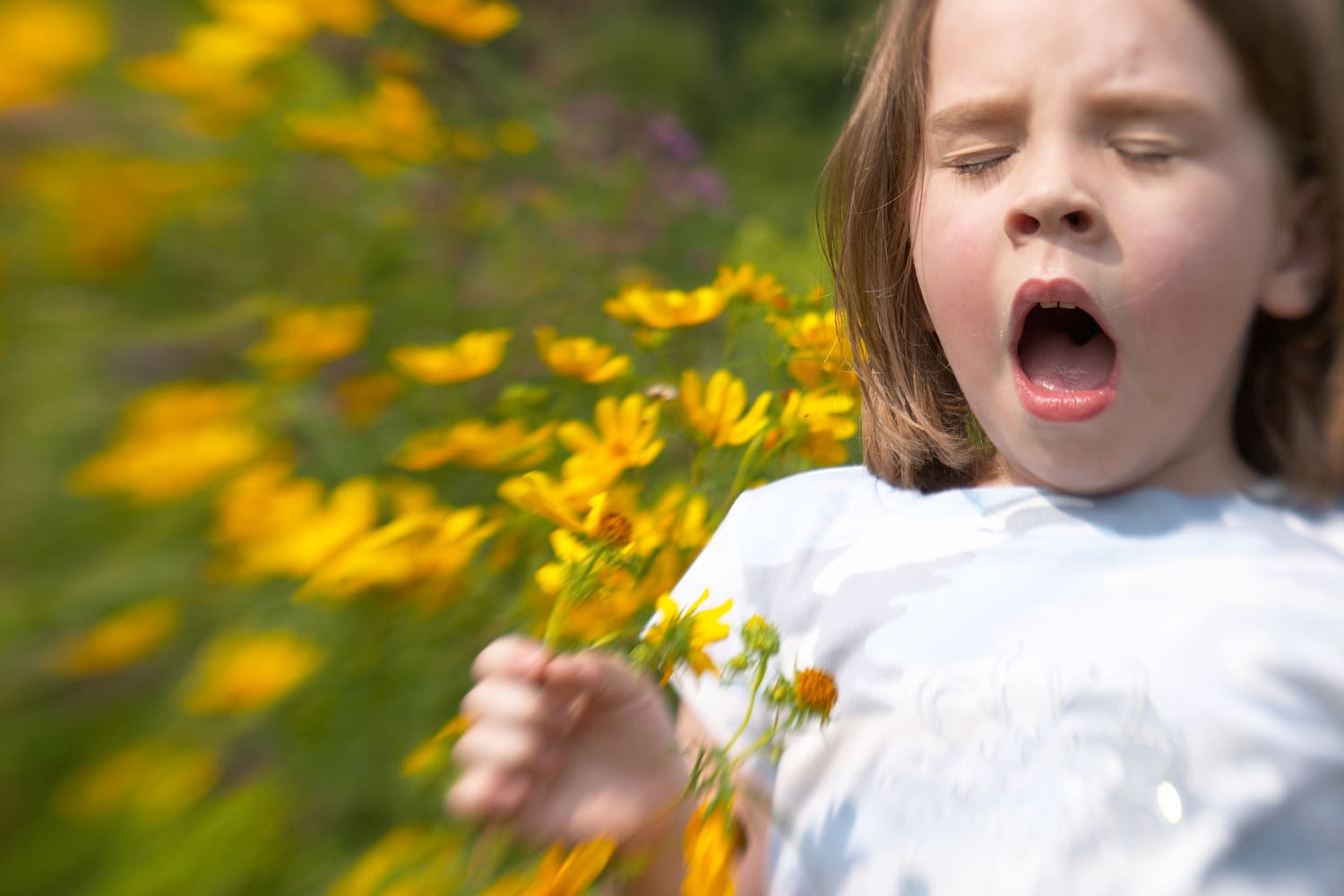
If you’re parenting in the Pacific Northwest, you already know that allergy season here isn’t really a season at all; it’s a cycle that rolls from one trigger to the next. In places like the Willamette Valley, pollen counts are closely tracked by organizations such as IQAir and Oregon Allergy Associates because levels can rise quickly and intensely.
Many families are surprised to learn that spring is not always the worst stretch. While tree pollen ramps up dramatically in late winter and early spring, the most miserable weeks for many children actually fall between April and June, when grass pollen peaks.
The Pacific Northwest has a near-perfect storm of allergy triggers that move in waves throughout the year:
- February–April (Tree Pollen): Alder, hazel, birch, cedar, and maple
- April–July (Grass Pollen – Peak Season): Primarily ryegrass, the dominant allergen in western Oregon
- August–September (Weed Pollen): Sagebrush and ragweed
- Year-Round: Mold spores due to persistent regional dampness
Tree pollen can begin as early as late January after a mild winter. By late April, grass pollen becomes the dominant irritant. In fact, the Willamette Valley is often cited as one of the most challenging regions in the country for exposure to grass pollen. Even when pollen counts dip, mold spores remain present because of wet leaves, moss, and moisture-heavy air.
For kids, seasonal allergies often look different from what parents expect. Instead of dramatic sneezing fits, many children show a steady pattern of symptoms that can resemble a lingering cold.
Common signs include:
- Persistent, clear runny nose
- Itchy, watery, or red eyes
- Dark circles under the eyes (“allergic shiners”)
- Mouth breathing
- Nighttime coughing
- Frequent throat clearing
- Irritability or unusual fatigue
- Eczema flare-ups
Unlike a cold, allergies typically:
- Do not cause fever
- Last longer than 7–10 days
- Follow predictable seasonal patterns
If your child seems worse just when the weather improves and outdoor time increases, pollen is often the culprit.
It’s also important to remember that not every chronic cough or throat symptom is caused by allergies. In our family, we thought we had allergies, but after allergy testing, we are seeing if it is something else. Our physician is exploring Gastroesophageal Reflux Disease (GERD) because it can sometimes mimic seasonal symptoms. GERD occurs when stomach acid flows back into the esophagus due to a weakened or improperly relaxing lower esophageal sphincter.
In children, it may present as:
- Chronic cough
- Throat clearing
- Chest discomfort
- Sleep disruption
GERD is usually managed with lifestyle changes, such as avoiding lying down after meals, adjusting diet, and sometimes using antacids or prescription medication. If allergy treatments are not helping, it’s worth discussing reflux with your pediatrician.
You should consider medical guidance if:
- Symptoms interfere with sleep
- Your child is missing school
- Over-the-counter medications are not effective
- You notice wheezing or shortness of breath
In addition, Allergies and asthma frequently overlap, and early treatment can significantly improve quality of life.
Day-to-day management can create a meaningful difference. Pollen levels are often highest in the morning and early evening, so planning outdoor activities carefully can help.
On high-count days, practical steps include:
- Keeping windows closed
- Running HEPA air filters
- Limiting prolonged midday outdoor exposure
- Wearing sunglasses or masks when appropriate
At home, small habits reduce pollen buildup:
- Wash your hands and face after outdoor play
- Change clothes immediately after coming inside
- Shower before bed during peak season
- Wash bedding weekly in hot water
Many pediatricians recommend starting allergy medications before your child’s typical peak season. For example, if grass pollen consistently triggers symptoms in May, beginning treatment in April may prevent the inflammatory response from escalating. Treatment options may include antihistamines, nasal steroid sprays, eye drops, allergy testing, or immunotherapy (allergy shots or drops).
Beyond the physical symptoms, seasonal allergies can quietly affect mood, focus, and behavior. A child who appears distracted, emotional, or short-tempered in late spring may simply be exhausted from chronic congestion and disrupted sleep. When symptoms are well managed, parents often see improvements in concentration, patience, and general well-being.
The Pacific Northwest’s lush forests and green landscapes are part of what makes this region so beautiful. The trade-off is a long, layered pollen season, with the most difficult stretch in Oregon generally occurring from April through June due to grass pollen. With awareness, preparation, and proactive care, most children can still:
- Play sports
- Camp
- Garden
- Enjoy summer
If you suspect your child has seasonal allergies, you are not overreacting. In this region, it is common and, with the right plan, manageable.

Johanna is married with two kids, three dogs, three cats, one leopard gecko, several chickens, and a few fish. She has been in the Pacific Northwest since the dream was alive in the 90s but has Southern roots and hails from Arkansas. The family spends a lot of time at some sort of sporting event for the kids. Johanna likes to fast craft, garden, host parties, and bake. Johanna and her crew go hard traveling, DIY-ing, and are always up for a new adventure or challenge.