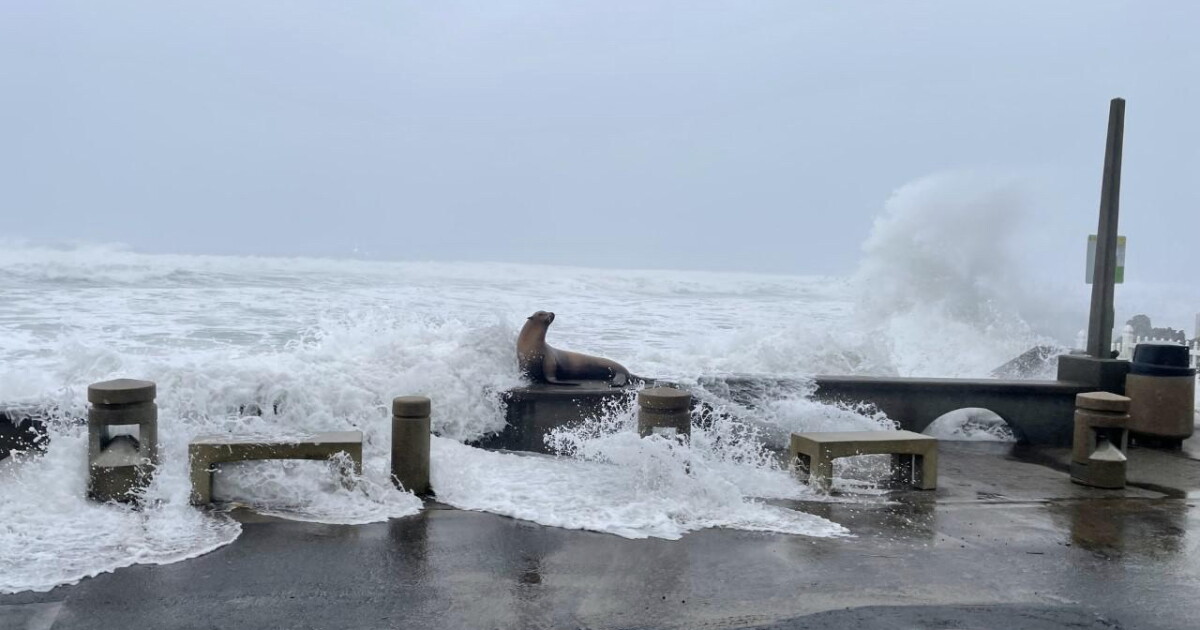
If you’ve ever taken your children to the Oregon Coast in December, you know it’s a considerably different experience from visiting in July. Nobody’s particularly interested in building sandcastles, the wind seems determined to remove your jacket, and the ocean looks a little more intimidating than usual.
But winter is also one of the most interesting times to learn about the Oregon Coast. This December, families have an opportunity to participate in a community science project that helps researchers understand what’s happening along our shoreline.
The Oregon King Tides Photo Project returns December 22 through December 26, 2026, inviting people to photograph exceptionally high tides from safe locations. Another series of king tides will occur January 20 through January 24, 2027.
You don’t need an expensive camera, a science degree, or even a particularly good understanding of tides to participate. You do, however, need to take ocean safety seriously.
What Exactly Are King Tides?
Children who have spent time at the beach have probably noticed that the ocean doesn’t stay in the same place throughout the day. Sometimes there’s plenty of room to run around on the sand, while other times that same stretch of beach is underwater.
The gravitational pull of the moon and sun helps create these changes in water levels. When their positions align in certain ways, the difference between high and low tides becomes more pronounced.
King tides are exceptionally high astronomical tides. They can push water into areas that normally remain dry, particularly when storms and strong winds contribute to rising water levels.
One important distinction is that king tides aren’t necessarily enormous crashing waves. Sometimes the most noticeable difference is simply how far the water reaches inland.
For children, it’s an interesting way to see how something happening hundreds of thousands of miles away in space can affect what happens right here in Oregon.
It might also be the first time your child has willingly participated in a science lesson during Christmas break. I’d consider that a small parenting victory.
Why Oregon Wants Your Photographs
Oregon has participated in the King Tides Photo Project for 15 years. The effort brings together community members, coastal organizations, researchers, and government agencies to document unusually high water levels.
The photographs help illustrate how rising seas could affect coastal communities in the future. They can also reveal places where roads, buildings, and other infrastructure may be vulnerable to flooding.
What’s particularly interesting is that ordinary people can contribute to this work. You don’t need specialized equipment or professional photography experience.
A useful photograph might show water reaching a bridge support, seawall, or another permanent structure. These familiar objects help researchers understand how high the water has risen compared with normal conditions.
The Oregon Department of Land Conservation and Development’s November announcement explains how participants can contribute photographs and document the locations where they were taken.
For older children, this is a great introduction to community science. They’re not simply reading about the environment in a textbook. They’re learning how observations made by everyday people can help researchers understand environmental changes.
Turn It Into a Family Science Project
If you’re planning to visit the coast during winter break, you could introduce your children to the project before leaving home. Start by asking them what they think causes tides and whether they believe the ocean reaches the same height every day.
You might get some surprisingly creative answers. Children are particularly good at developing scientific theories that sound completely reasonable until you spend approximately five seconds thinking about them.
Look at tide predictions together using the National Oceanic and Atmospheric Administration’s tide prediction website. Different coastal locations experience high tide at different times, so the predictions will depend on where you’re visiting.
You could also look at photographs of previous king tides and compare them with ordinary coastal photographs. Ask your children to identify landmarks and notice how the water level changes around them.
If conditions are safe during your visit, have your children help document what they observe from a protected location. An adult can handle the photography while the kids record the date, location, weather, and other details.
If you’re able to return to the same safe viewpoint during a normal high tide, a second photograph can provide a useful comparison.
The Most Important Part Is Staying Safe
I cannot emphasize this enough. Winter on the Oregon Coast is not the time to see how close you can get to the ocean.
King tides can contribute to coastal flooding, and winter storms can create dangerous surf conditions. Sneaker waves can travel unexpectedly far inland, and large pieces of driftwood can move when waves reach them.
Children should never approach the water to get a better photograph. Adults shouldn’t do it either, regardless of how impressive they think the resulting picture might look.
Stay at established, protected viewpoints well away from the surf and any areas threatened by flooding or erosion. Respect road closures, beach closures, fences, and warning signs.
Before heading out, review the Oregon Coast’s beach safety guidance and check local weather and coastal advisories.
If conditions are dangerous, skip the outdoor portion entirely. No photograph or family science project is worth putting anyone at risk.
You can still participate in the educational side of the experience by reviewing photographs and tide predictions from home.
Why I Like This Winter Break Activity
December tends to be packed with activities designed specifically for children. There are Christmas lights, holiday performances, visits with Santa, and enough seasonal crafts to keep every glue stick manufacturer in business.
Those experiences are wonderful, but I also like finding activities that encourage children to pay attention to the world around them.
The King Tides Photo Project gives families an opportunity to explore a real environmental issue in a way that children can understand. They can see how the ocean changes, learn why those changes matter, and discover how scientists use observations to answer questions.
It’s also a reminder that the Oregon Coast is much more than a summer vacation destination. The shoreline is constantly changing, and winter offers a different perspective on a place many Oregon families already know and love.
Whether you participate from a safe coastal viewpoint or explore the project from your living room, it’s an interesting way to spend part of winter break.
And unlike most December activities, nobody needs to purchase a ticket or stand in line waiting to meet Santa.
When Are Oregon’s Next King Tides?
The remaining observation periods for the 2026–27 winter season are December 22–26, 2026, and January 20–24, 2027. Exact high-tide times vary by location, and actual water levels can also be influenced by weather conditions.
Visit the Oregon King Tides Project to learn more about participating and explore photographs from previous years. Families should always prioritize safety, follow local advisories, and avoid exposed coastal areas during hazardous conditions.
Your children might come away with a better understanding of the moon, the ocean, and the importance of protecting Oregon’s coastal communities. That’s a pretty good return on a winter break science lesson that doesn’t require anyone to open a textbook.

Tiffany Wilson is a 42-year-old stay-at-home mom from Tigard, Oregon, raising three kids—Sophie, Noah, and Riley. She’s a warm, hands-on parent who mixes daily routines with creative fun, whether it’s a backyard scavenger hunt or building a blanket fort in the living room.