
There are certain things I don’t miss about having preschool-aged kids. The tantrums over absolutely nothing. The inability to leave the house without bringing approximately 47 things. The constant negotiations over bedtime, food, clothing, and pretty much everything else.
But there’s one thing I do miss. The questions.
Preschoolers are curious about everything. And I mean everything. They’ll ask why the sky is blue, why dogs have tails, why people get old, and why they can’t eat ice cream for breakfast. You answer one question, and before you’ve finished your sentence, they’ve got another one ready.
Sometimes the questions are pretty good. Other times, you’re standing in the kitchen at 7 a.m. trying to explain something about the solar system when you haven’t even had your coffee.
My kids are older now, but I remember that stage. It’s exhausting, sure, but it’s also pretty entertaining. And when you think about it, there’s something refreshing about being that interested in the world around you.
Which brings me to something I came across recently from the Oregon Museum of Science and Industry (OMSI).
It’s called Curiosity Kids, a program designed for children ages 3 to 5 that introduces them to science, engineering, and nature through hands-on activities. Nothing too complicated. No homework, no tests, and thankfully, no science fair projects that somehow become the parents’ responsibility.
Just kids learning by doing things.
Science Without The Science Class
I think one of the mistakes we sometimes make as parents is assuming that learning needs to look a certain way.
We picture classrooms, books, worksheets, and someone standing at the front explaining things. And eventually, yes, our kids will spend plenty of time doing all of that.
But a four-year-old doesn’t necessarily need a lesson about engineering. Give them a pile of materials and ask them to build something, and they’ll start figuring things out on their own.
That’s essentially what OMSI is doing here.
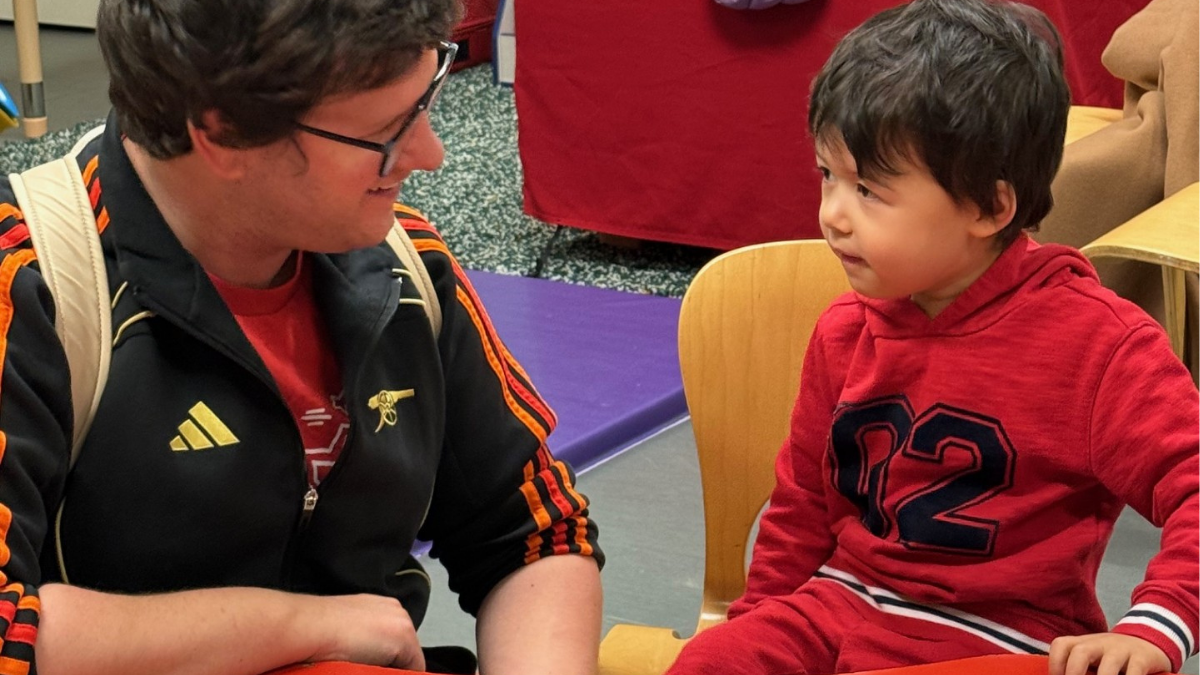
Curiosity Kids offers hour-long sessions that begin with a welcome and a story before moving into activities led by OMSI educators. Parents participate alongside their children, which I think is an important part of the experience.
It’s not a situation where you drop your kid off, disappear for an hour, and return hoping they’ve learned something useful.
You’re involved. You’re helping them experiment, asking questions, and probably watching them come up with solutions you hadn’t considered.
And if your child is anything like mine were at that age, they’ll also have very strong opinions about how you’re doing things.
The program introduces STEAM concepts, meaning science, technology, engineering, art, and mathematics. That’s a fairly intimidating collection of subjects for someone who still needs help putting on their shoes, but the activities are designed specifically for preschoolers.
OMSI also offers the program in English and Spanish, which opens the door for more families to participate.
Sasquatch, Building Things, And Animal Poop
There are three different Curiosity Kids experiences, and I have to admit, OMSI did a pretty good job coming up with topics that preschoolers might actually care about.
First up is Sasquatch Science Team.
Honestly, that’s a pretty solid name for a children’s program in Oregon. If you’re going to teach science in the Pacific Northwest, why not involve Bigfoot?
The class focuses on the five senses as kids investigate the mysterious Sasquatch and learn how sight, sound, smell, touch, and taste help us understand our surroundings.
I have no idea whether this will finally settle the Bigfoot debate, but I suspect a room full of four-year-olds might have some interesting theories.
The next Sasquatch Science Team session is scheduled for November 14, 2026.
Then there’s Design and Discover, which focuses on engineering.
Kids and their parents work together to build things, test their creations, and make improvements when something doesn’t work.
I actually think this might be the most valuable of the three programs, at least from a parenting standpoint.
Young kids aren’t always particularly good at handling failure. If something doesn’t work immediately, the natural reaction can be frustration, tears, or throwing whatever they’re working on across the room.
Learning that you can try something, have it fail, make a few changes, and try again is a pretty useful skill. Frankly, plenty of adults could use a refresher.
Design and Discover sessions are scheduled for November 28 and December 5, 2026.
The third program is Become a Nature Detective, where kids investigate animal tracks, hair, scat, and other clues to figure out which animals might have left them behind.
For those unfamiliar with the term “scat,” it’s animal poop.
So yes, OMSI has found a way to turn poop into an educational experience. I’m guessing that particular activity won’t have much trouble holding a preschooler’s attention.
Jokes aside, it’s a clever way to introduce observation and problem-solving. Kids get to examine clues and make their own guesses instead of simply being told the answers.
OMSI hasn’t listed another upcoming date for Become a Nature Detective, but families can check the program page for updates.
The Part Parents Will Appreciate
Here’s something that caught my attention. Registration for Curiosity Kids also includes same-day general admission to OMSI.
That’s a nice bonus, particularly when you’re trying to justify the cost of getting everyone out of the house for an activity that only lasts an hour.
You can attend the class and then spend additional time exploring the museum. Depending on your child’s energy level, that could mean another hour of entertainment or an entire afternoon.
Of course, it could also mean your child decides they’re completely finished with the museum approximately seven minutes after the class ends. That’s the risk you take with preschoolers.
Each class accommodates up to 20 people, so you’re not dealing with a huge crowd. At least one adult needs to participate with the children throughout the session, and OMSI recommends no more than three children per adult.
Younger siblings ages 2 and under can attend, although the activities are geared toward ages 3 to 5. Older siblings can participate with a ticket as well.
The sessions take place in OMSI’s Discovery Lab at 1945 SE Water Avenue in Portland. Members and families who qualify for OMSI’s discounted admission programs may also be eligible for reduced pricing.
One thing I’d recommend is registering ahead of time. With a relatively small number of participants allowed in each session, I wouldn’t assume you can just show up and get a spot.
Looking Back At Those Preschool Years
Now that my kids are older, I find myself looking at activities like this a little differently.
When they’re little, you’re constantly searching for ways to keep them busy. You want them to learn something, burn off some energy, and ideally make it through the day without a major meltdown.
Sometimes that’s about as ambitious as the parenting plan gets.
But looking back, I think some of the better experiences are the ones where you actually get to participate alongside your kids.
Not necessarily because they learn some groundbreaking scientific principle or suddenly become fascinated with engineering. Sometimes it’s just about spending an hour doing something together that neither of you would have thought to try at home.
And I like that Curiosity Kids doesn’t appear to be trying to turn preschoolers into little scientists overnight.
It’s introducing them to a few ideas, letting them experiment, and giving them an opportunity to figure things out. That’s probably enough at that age.
We put a lot of pressure on ourselves to make sure our kids are learning, developing, and preparing for whatever comes next. Kindergarten readiness becomes a big deal, and suddenly we’re worrying about things that probably didn’t cross our parents’ minds nearly as often.
But sometimes a kid building something, investigating an animal track, or asking a ridiculous question is doing exactly what they’re supposed to be doing.
For Portland families with children ages 3 to 5, Curiosity Kids seems worth checking out. It’s educational without being overly structured, parents get to join in, and you can make a larger OMSI visit out of the experience.
Plus, with Oregon’s rainy season settling in, another indoor option isn’t exactly a bad thing.
And if your preschooler comes home convinced they’ve discovered evidence of Sasquatch, well, that’s just part of growing up in Oregon.
For more information, upcoming dates, pricing, and registration, visit OMSI’s Curiosity Kids website.
