Upcycling is the practice of turning worn or discarded clothing into something new. It has become a practical and creative response to problems that often feel too big to tackle, such as the environmental cost of the fashion industry and the financial cost of clothes for growing children (especially in the current economy). For families in the Pacific Northwest, where values like conservation, creativity, and resourcefulness run deep, upcycling fits naturally into everyday life. It does not require expensive tools or formal training. It simply asks you to see possibilities where others see waste.
In some ways, you are probably already doing some upcycling. Turning jeans into shorts is one of the easiest places to start. Kids can help decide where to cut and whether to leave the edges raw or hem them. More than a craft, upcycling can reshape how families think about clothing, money, and the environment. It gives children a hands-on way to learn creativity and responsibility, while helping parents stretch budgets.
The Need for Upcycling in Oregon
Kids need durable clothes for mud, playgrounds, and constant activity here in the PNW, yet they outgrow those clothes quickly. This combination of heavy use and rapid turnover creates a steady stream of garments that are still usable but often discarded.
Across the United States, the average person throws away around 80 pounds of clothing each year. Much of it is still in good condition. Synthetic fabrics, common in rain gear and athletic wear, can take decades or longer to break down. In an area that values environmental stewardship, such waste really stands out.
Upcycling offers a simple, local way to reduce that impact. Instead of relying only on recycling systems or secondhand stores, families can extend the life of what they already own, right at home. Children are at the center of the upcycling opportunity. They grow quickly, they are hard on clothes, and they are naturally creative. What can feel like a burden, the constant need to replace clothing, becomes an advantage when paired with simple upcycling habits.
Getting Kids Involved
A pair of rain pants that is suddenly too short does not need to be thrown away. It can be made into summer shorts or lengthened with an added fabric panel. A stained sweatshirt can be refreshed with fabric paint or patches. Small changes like these keep clothes in use longer and reduce the need for new purchases.
Children can also take part in the process. My daughter is always giving old things new life. She just made a patchwork fish, attached it to a sweater, and added “Gone Fishin’” in felt. She isn’t just saving old clothes; she is putting her mark on her wardrobe. When children help cut, paint, or stitch, they begin to understand that objects are not disposable. A shirt becomes something they can shape, fix, and reinvent. And they make it their own!
Where to Start
Begin by gathering outgrown, damaged, or no longer worn clothes. Instead of discarding them, set them aside as potential materials. A small kit with fabric scissors, a needle and thread, hemming tape, and fabric paint is enough for most beginner projects.
No-sew options are especially helpful for busy families. Cutting, tying, painting, and patching can go a long way without requiring advanced skills. As confidence grows, simple sewing can be introduced. Making it a shared activity helps build consistency. A weekend upcycling session can replace a shopping trip and become part of a family routine.
Old T-shirts can be cut into strips and braided into jump ropes, woven into mats, or turned into soft yarn for simple crafts. Upcycling with kids works best when projects are hands-on, quick, and forgiving. The goal is not perfection but participation.
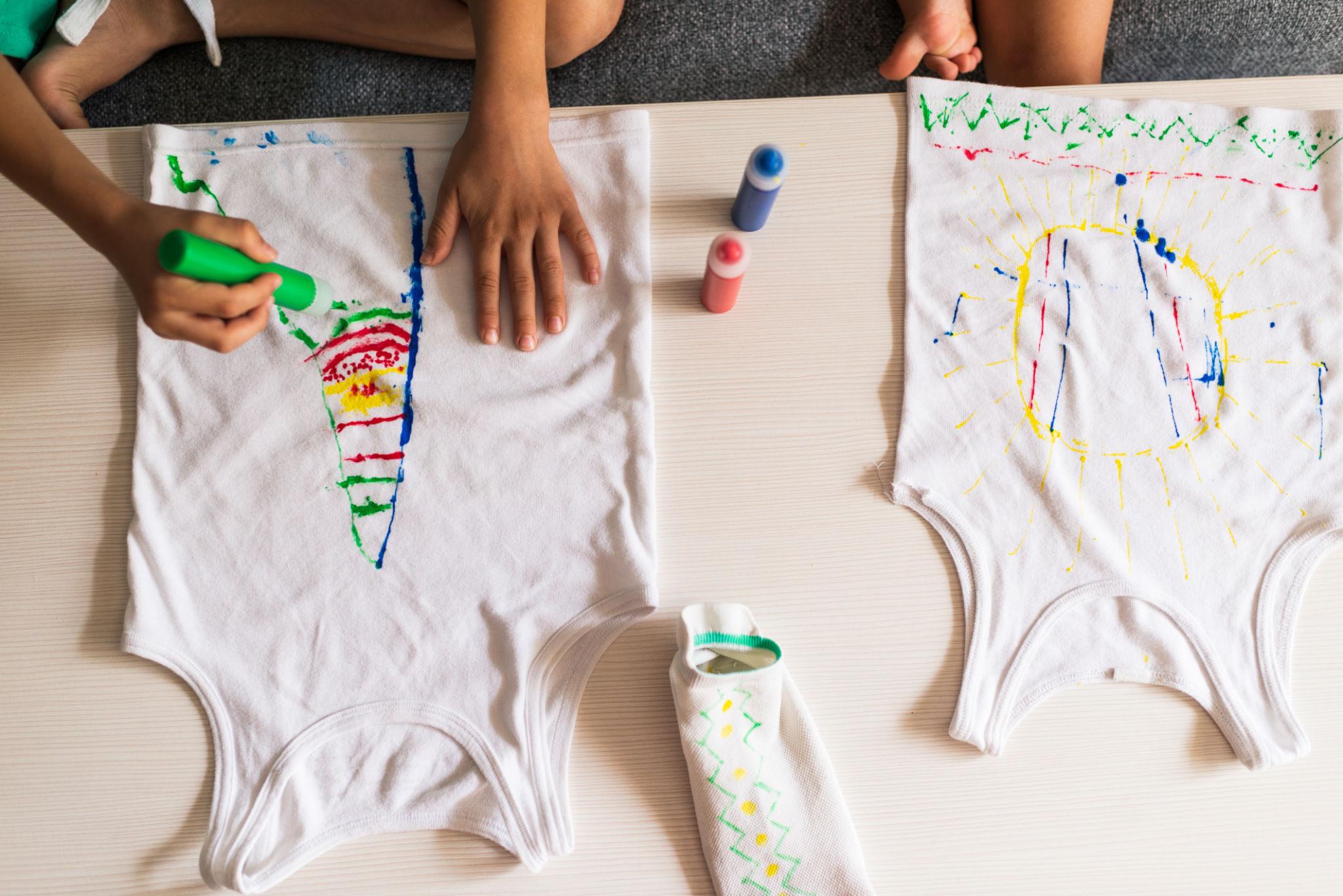
Stains, which often end a garment’s life, can become a starting point. Tie-dye, fabric markers, or iron-on patches can cover marks while giving kids control over the design.
What was once considered ruined becomes unique. And just like my daughter proved, even small scraps can be used. Pieces from outgrown pajamas or favorite shirts can be sewn or glued into patchwork bags or keepsakes. These items carry memories as well as practical value.
If you don’t think you are creative enough to upcycle, get inspo from others. There are plenty of people upcycling clothes on Instagram, like this account. Or go to Pinterest to see what people are doing, like this person. Or YouTube has a ton of videos to get you started. Just start exploring! Soon, in Bend, Oregon, there will even be an upcycled fashion show.
The Money
For many families, clothing costs add up quickly. Children’s wardrobes need frequent updating, and outdoor gear such as jackets and boots can be expensive.
Upcycling helps change that. Instead of replacing items at full price, families can adapt what they already have or repurpose secondhand finds. A large flannel shirt can become a child’s overshirt. An adult sweater can be resized into a warm layer for a child.
The savings are meaningful. Even small efforts can reduce annual clothing costs. Over time, this can free up hundreds or thousands of dollars for other needs or goals. Upcycling is not only about saving money or reducing waste. It helps build a different relationship with material things.
For children, it encourages problem-solving. They begin to ask how something can be fixed or changed. It also builds patience and confidence. Finishing a project creates a sense of accomplishment that buying something cannot. For parents, it offers a shift away from constant consumption. Instead of regularly replacing items, there is a chance to slow down and make better use of what is already available. This often leads to more thoughtful purchasing decisions over time.
The Impact
The environmental impact and financial burden of the fashion industry can feel overwhelming, but upcycling brings the issue down to a manageable scale. One garment at a time, families can reduce waste, save money, and build useful skills. Things do not need to be thrown away just because they no longer serve their original purpose. With effort and creativity, they can be transformed.

Johanna is married with two kids, three dogs, three cats, one leopard gecko, several chickens, and a few fish. She has been in the Pacific Northwest since the dream was alive in the 90s but has Southern roots and hails from Arkansas. The family spends a lot of time at some sort of sporting event for the kids. Johanna likes to fast craft, garden, host parties, and bake. Johanna and her crew go hard traveling, DIY-ing, and are always up for a new adventure or challenge.