
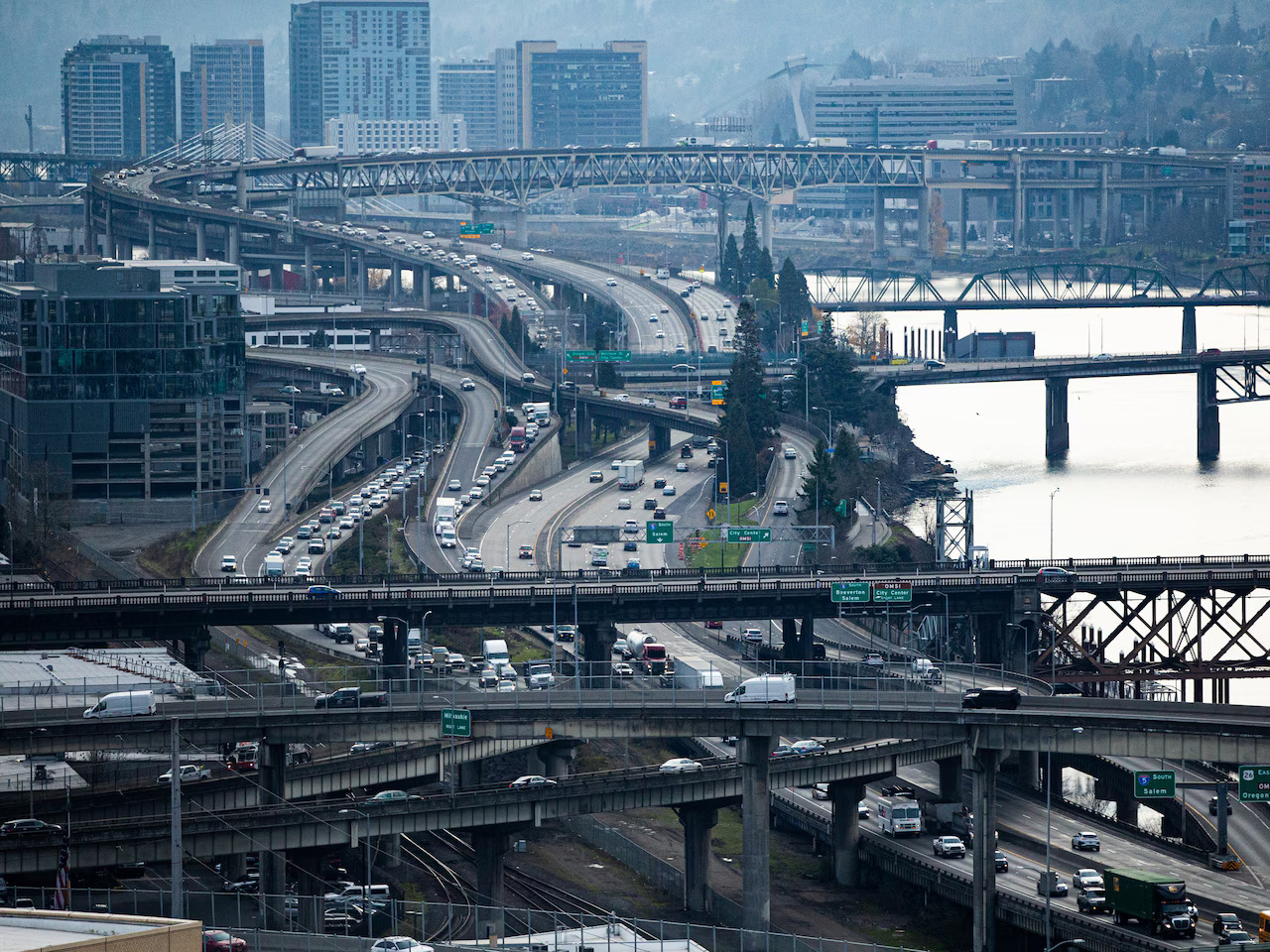
There are few phrases that can strike fear into a Portland parent’s heart like “major freeway closure.” Maybe “your child needs a costume tomorrow” comes close. But starting this week, families across the Portland metro area will have to deal with a transportation headache that could make the usual rush-hour traffic look surprisingly pleasant.
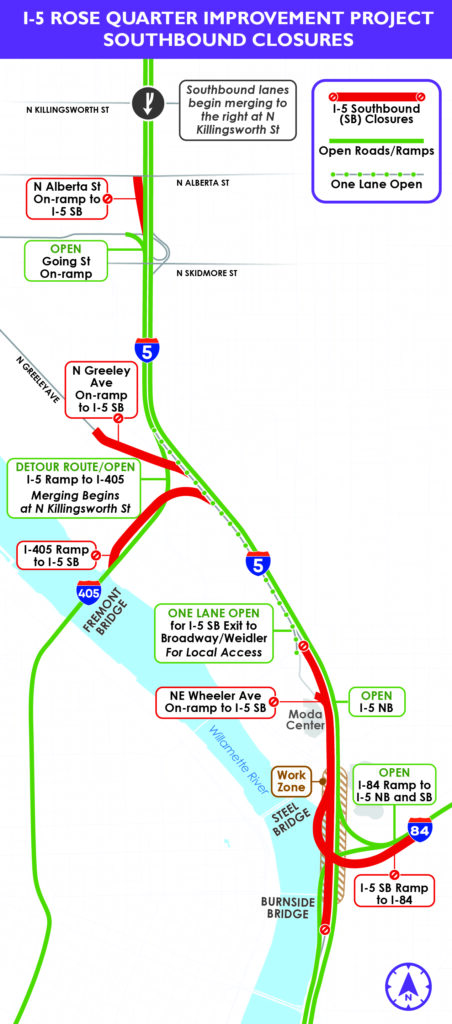
Beginning at about 10 p.m. Friday, September 11, all southbound lanes of Interstate 5 through Portland’s Rose Quarter will close around the clock for up to five weeks. The closure runs between I-405 and I-84, although one southbound lane will remain available as far as the Broadway/Weidler exit near the Moda Center. The work could continue into mid-October.
And this isn’t one of those road projects you can ignore because “we never drive over there anyway.”
ODOT expects the effects to spread well beyond the Rose Quarter. Officials warn that some trips could take two to three times longer than normal, with congestion potentially stretching across the Columbia River into Washington and spilling onto Portland streets. I-405, I-205 and the routes people inevitably discover while frantically staring at Google Maps are also expected to get busier.
In other words, Portland is about to begin a five-week experiment called “What Happens When Everyone Takes the Alternate Route?”
Why Is I-5 Closing?
The closure isn’t happening for cosmetic improvements. The elevated portion of I-5 immediately south of the Moda Center needs significant repairs after decades of use.
Crews will remove the existing concrete surface, repair the weak portions underneath, and replace the pavement. The concrete there was last replaced in 1985 and has outlived its expected 25-year lifespan. Crews will work around the clock during the closure to reopen the freeway as quickly as possible.
ODOT considered other construction approaches, but officials say a full southbound closure lets crews finish faster while saving as much as $9 million compared with alternatives. Roughly 120,000 vehicles normally travel through this section of I-5 each day; however, “faster” will probably feel relative to anyone sitting in traffic over the next month.
What Does This Mean For Families?
The biggest advice may also be the simplest: stop assuming your normal trip will take its normal amount of time.
School drop-offs and pickups could become particularly tricky, especially for families traveling between North or Northeast Portland and other parts of the metro area. Even parents who never touch I-5 could encounter additional cars on neighborhood streets as drivers search for alternatives.
That matters when you’re trying to make a 3:15 pickup, get a kid to soccer practice at 5:00, or travel from one child’s activity to another with exactly seven minutes to spare. The carefully engineered family schedule may need considerably more breathing room for a few weeks.
Medical and dental appointments deserve the same treatment. If you’ve got something scheduled across town, particularly during the morning or afternoon commute, leaving 10 minutes early probably isn’t going to qualify as a traffic strategy anymore. ODOT says travel times could sometimes double or triple, so check conditions before leaving and build in extra time.
Weekend adventures aren’t immune either. A trip to OMSI, the Oregon Zoo, a Timbers game, a birthday party, or practically anywhere requiring a journey across Portland could take longer depending on where traffic gets pushed. This doesn’t mean families need to cancel plans and spend five weeks staring sadly out the living-room window. It does mean checking the route before throwing everyone into the car.
Your Favorite Shortcut May Not Be Much Of A Shortcut
Southbound I-5 traffic will primarily detour onto I-405, while ODOT is encouraging regional traffic to use I-205. Several southbound ramps will also close, including the ramps from Alberta Street, Greeley Avenue, and northbound I-405/Fremont Bridge. Northbound I-5 will remain open.
The problem, of course, is that thousands of other drivers will receive the same advice.
Surface streets could become much busier as people attempt to escape freeway congestion. So before deciding that MLK, Interstate Avenue, or another familiar Portland route will save the day, check real-time traffic first. Your secret shortcut isn’t especially secret when everybody’s phone recommends it at the same time.
This Might Be The Month To Try MAX
For some families, public transportation could become a much more appealing option.
TriMet says MAX trains should avoid much of the traffic because they largely operate on dedicated right-of-way. The Yellow Line could be particularly useful for trips between North Portland and downtown, while the Red, Blue, and Orange lines offer alternatives from other parts of the metro area. TriMet has also highlighted Park & Ride options throughout the region for people who don’t live within walking distance of MAX.
Buses are a slightly different story. Because buses share Portland streets with cars, TriMet warns that several routes could experience delays as freeway traffic moves onto local roads. If your family’s commute depends on a bus, give yourself some extra time and check arrival information before heading out.
For kids who rarely ride MAX, you could even turn an otherwise annoying situation into a small adventure. Park the car, hop aboard, and let someone else deal with traffic for once. Just remember that each rider needs their own way to pay the fare.
A Little Planning Could Save A Lot Of Frustration
For the next several weeks, flexibility will probably be the most useful thing Portland families can bring with them.
Check traffic before leaving home. Give yourself much more time for appointments or activities you can’t miss. When possible, shift departure times away from the busiest commute periods. Carpool for practices or school activities. Try transit when it makes sense. And if you’ve been planning a Saturday adventure on the opposite side of town, this might be the rare occasion when the closer option suddenly looks fantastic.
Nobody will enjoy five weeks of extra Portland traffic. Parents already spend enough of their lives driving somebody somewhere while answering questions like “How much longer?” from the back seat.
But the closure is temporary, and the repairs are overdue. For families, the goal isn’t to avoid Portland until October. It’s simply to know what’s coming, expect some disruption, and avoid discovering the biggest transportation headache of the fall while you’re already 10 minutes late for soccer practice.
