
Dogs study family life with impressive attention. They notice who drops snacks and who lets them explore outside after a single bark. Each outcome teaches the dog how to gain attention or access.
Many bad behaviors you teach your dog accidentally start with how your family goes about your ordinary routine. Nobody plans to reward jumping or barking. Knowing how your dog connects certain behaviors will help everyone avoid actions that lead to bad habits.
1. Feeding Your Dog During Family Meals
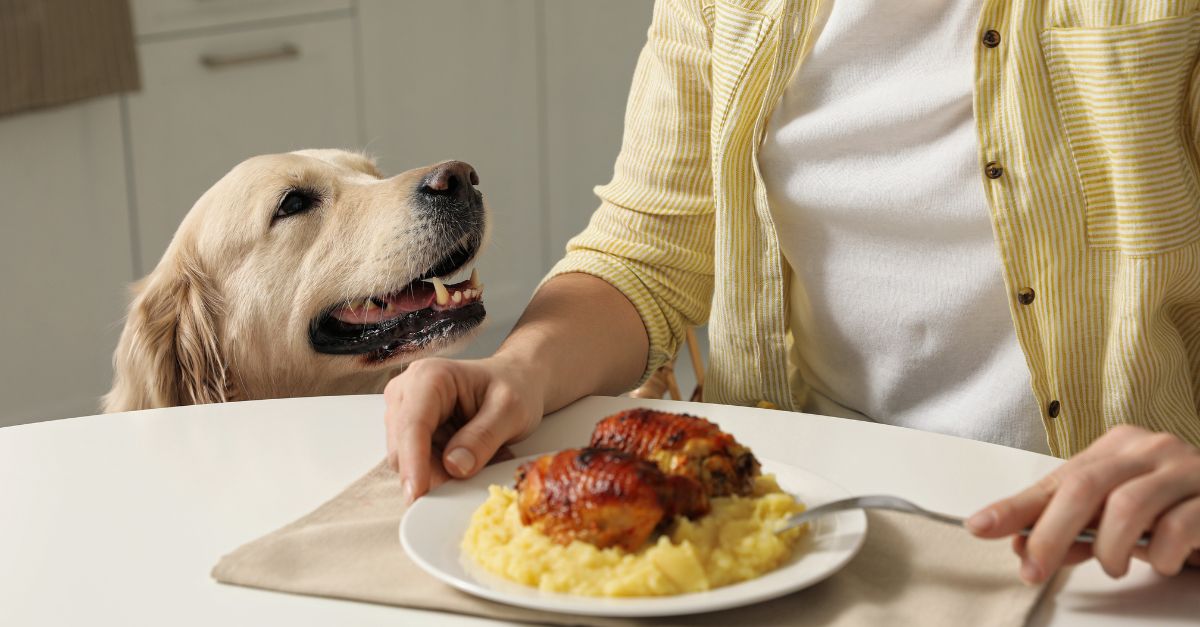
A dog who waits beside the table likely started with one successful attempt. Someone offered a bite during dinner, and the next person shared a piece of crust from a sandwich after lunch. Soon, the dog learned table patrol produced delicious rewards.
Begging becomes entrenched as household responses change from day to day. One parent might ignore the dog during meals. A child might slip food under the table whenever nobody watches. Nevertheless, the occasional wins encourage the dog to try meal after meal.
If you want your pup to stop begging for food while you’re eating, every family members need to know that they can’t feed the dog table scraps. Over time, your dog will back off from the table because there’s no longer any payoff behind hovering. It will be difficult at first to resist giving in to their adorable face, but these consistent actions will teach your dog to step aside while everyone eats.
2. Petting Your Dog After They Jump
Jumping usually earns exactly what the dog wants. A parent walks through the door, and the dog launches upward with excitement. Hands reach down to push the dog away or offer a quick scratch. From the dog’s perspective, the jump worked because it produced contact.
Children might strengthen the habit by squealing or waving their arms. Those reactions add movement and energy to the greeting. The dog might jump with extra force during the next arrival because the response resembled play.
Teach every family member to pause at the doorway and keep hands close to the body. Offer attention after all four paws touch the floor. By working on calm greetings, dogs will comprehend that steady behavior opens access to affection.
3. Repeating Commands Several Times
Busy homes make repeated commands understandable. A parent says “sit” during lunch packing and repeats the cue three times. The dog responds after the fourth request and receives praise. The sequence teaches the dog to ignore the first cue.
Children might copy the same pattern during play. They repeat “drop it” in a louder voice until the dog releases a toy. Volume becomes part of the cue, and the first request loses value.
Say the cue once and pause briefly. Then, guide the situation with a leash or remove the distraction. Practice during calm periods so every family member learns the same timing. One clear cue works best once the household follows through consistently.
4. Chasing Your Dog After They Steal
As soon as someone notices the dog sprinting away with a stolen sock, you or your child runs across the room. Before you know it, the whole house is playing a game of keep-away.
All the dog knows is that stealing an object brings lively energy and playtime. When you try to take the item away, the dog is likely to guard it or run farther away. A sudden pursuit raises the pressure around the object.
The best way to prevent future incidents is to place tempting objects out of reach. Push food items in the center of the table or at the far end of the kitchen countertop, and store clothes and kids’ toys in secure bins.
However, whenever your dog inevitably gets a hold of something they shouldn’t have, stay still, lower your voice, and redirect the dog’s focus back to you. Snag one of your pup’s favorite treats or toys, so they willingly let go of the stolen object. This bad habit will take awhile for the pet to overcome, but simply putting an end to the chase will stop the excitement of stealing household items.
5. Letting Children Use Their Hands During Playtime
Children often use their hands to interact with a pet during play, but the hands become a part of the game. Wiggling fingers near the dog’s face and laughing as they grab at clothing teaches dogs that skin and fabric belong in play. That early lesson seems harmless during the puppy stage, but it creates problems as the dog grows strong.
As excitement builds, the dog increases the intensity of its mouthing because earlier reactions reinforce the behavior. Children may laugh, squeal, or pull their hands away, and those reactions typically ignite even more energy. What starts as playful interaction can quickly overwhelm a child, especially when the dog escalates without clear boundaries.
To guide the behavior in a safe direction, redirect play toward tug toys or stuffed plushies that keep hands out of the game. Children need clear instruction to stop play immediately whenever the dog’s teeth touch skin or clothing. Consistent rules like these protect children, reduce confusion for the dog, and create a healthy way to enjoy interactive play.
6. Moving Ahead During Leash Pulling
Many dogs love to get outside, smell new scents, and greet strangers. Every step leads the dog toward something exciting. When the dog pulls forward and the family moves along, the dog learns a powerful lesson: Pulling gives them what they want. That connection strengthens quickly because the reward arrives immediately with each step.
One parent might stop walking the moment the leash tightens, but a child may not be able to resist a dog’s relentless pulling. Mixed responses confuse the dog, but they soon discover which person gives in to their desires. It also affects how the dog experiences pressure and excitement during walks. When the leash tightens and the dog is unable to move forward, stress builds. This helps explain why dogs react when they feel overwhelmed, like suddenly sprinting toward another animal or distraction.
You can change this pattern by establishing a predictable response. Stop walking the moment the leash tightens, so the dog no longer moves forward. Wait calmly, and avoid pulling back. As soon as the dog steps by your side or loosens the leash, resume walking. This simple feedback loop teaches the dog that relaxed walking keeps the journey going, while pulling brings everything to a stop.
7. Responding Quickly to Demand Barking
Demand barking thrives in a busy household because noise gets immediate attention. The dog barks near the toy basket, and someone throws a ball. Perhaps they bark at the back door, and a parent opens it. No matter the situation, the response reinforces that barking gives the pet what they want.
Ignoring the sound once won’t erase a well-practiced habit. The dog might bark with extra intensity because the old strategy worked before. Family members must expect this temporary increase and follow the same plan.
Wait for a quiet pause before opening a door or give a simple “sit” command before providing access. With a calm, controlled environment, your dog will stop barking and demanding outcomes.
Work Together To Improve Your Pet’s Behaviors
There are plenty of bad behaviors you teach your dog accidentally, but there are ways to overcome each of them. Work as a family to give the dog consistent, calm commands. Once everyone understands the various connections between the actions, you all can reshape the outcome and, in turn, the behavior.

Sam Hopes is a 37-year-old mom of two living in Portland, Oregon. She works as a freelance graphic designer and part-time yoga instructor, juggling creative projects with playdates and PTA emails. Known for her warm personality and dry humor, Sam loves hiking in Forest Park, thrifting on Mississippi Avenue, and weekend visits to OMSI with her kids, Ella and Milo. She’s the kind of parent who forgets sunscreen but always remembers snacks—and a good laugh.