
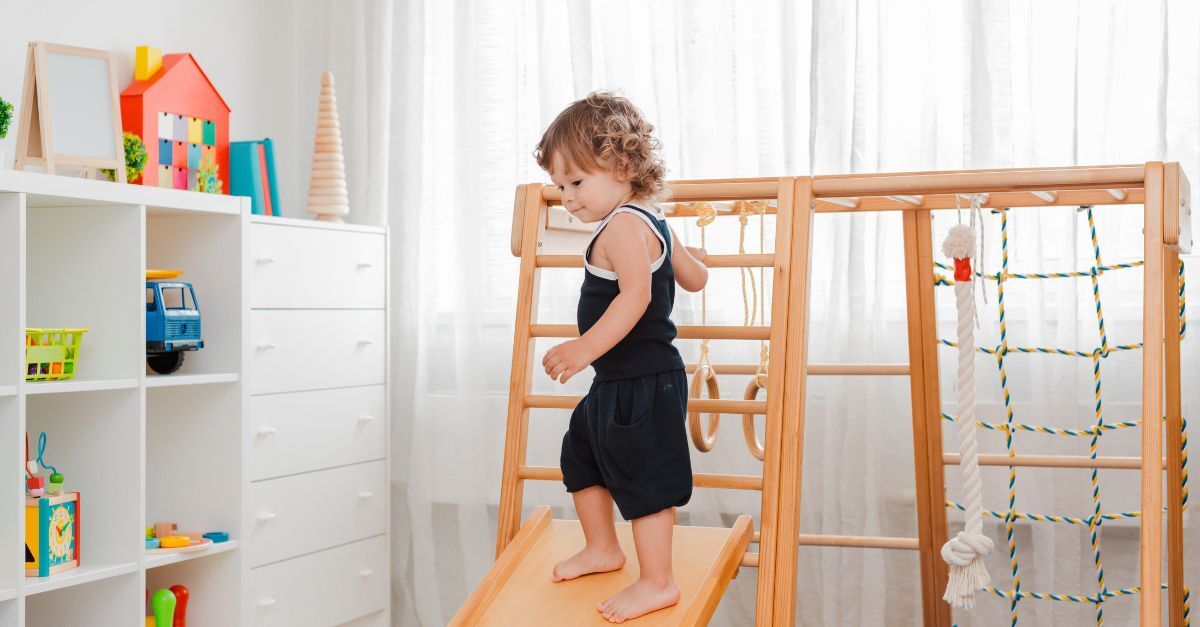
When kids are indoors more often, many parents start looking for small home changes that encourage more active play without making the house feel chaotic. The good news is that you do not need a huge remodel or a fully decked-out playroom to make that happen. In a lot of homes, a few thoughtful changes can make it easier for kids to move and burn off energy during the day.
Create a Space for Movement
Kids are more likely to be active when they know there is a spot in the house where movement is actually welcome. It does not have to be a big space, either. A corner of the basement, part of the family room, or even a cleared-out section of a bedroom can do the job. When children know they have a place where climbing and active play are okay, they are more likely to use it without needing much encouragement.
Keep Active Items Within Reach
Storage can make a bigger difference than parents expect. If mats, balance toys, stepping stones, or other active-play items are buried in a closet, they tend to stay there. When those same items are easy to see and easy to grab, kids are much more likely to use them on their own. Sometimes a shelf or simple bin at kid height is enough to make active play feel like a normal part of the day.
Use Vertical Space in Smart Ways
Not every home has room for larger play equipment, which is why wall space can sometimes be worth considering. When making small home changes to encourage more active play, adding a vertical feature may be one way to create more opportunities without taking up much floor space. For families exploring vertical play features, looking at different climbing wall designs can help with planning a setup that feels safe and easy to grow into.
Add Flooring That Feels Safer
The floor itself can also change how inviting a space feels. Padded mats or even a washable rug can make an area more comfortable for kids who like to jump, crawl, climb, or tumble. That extra layer can help parents feel more comfortable too, especially when younger children are involved. When a space feels safer, kids are often more willing to try new kinds of play.
Arrange Rooms To Invite Activity
Sometimes the simplest fix is rethinking what kids notice first. If TV screens and tablets are always front and center, that is often where attention goes. But when a room is arranged so that active options are visible and easy to reach, kids may be more likely to move around naturally throughout the day. It is a small shift, but it can have a big impact over time.
A home does not need to be fancy or oversized to support active play. More often, it is the smaller, practical changes that make the biggest difference. When kids can move around easily and safely, active play starts to feel less like something parents have to push and more like part of everyday life.

Sam Hopes is a 37-year-old mom of two living in Portland, Oregon. She works as a freelance graphic designer and part-time yoga instructor, juggling creative projects with playdates and PTA emails. Known for her warm personality and dry humor, Sam loves hiking in Forest Park, thrifting on Mississippi Avenue, and weekend visits to OMSI with her kids, Ella and Milo. She’s the kind of parent who forgets sunscreen but always remembers snacks—and a good laugh.